
Ingredients
Method
Step 1: Cook the Bacon
- In a large cast-iron skillet or another deep, heavy-bottomed skillet, cook the bacon over medium heat until it is crispy.
- Transfer the cooked bacon to a paper towel-lined plate, leaving all of the rendered bacon grease in the skillet. Once the bacon is cool enough to handle, chop it and reserve it for the end.
- Melissa’s Tip: The bacon grease should be enough to cook the entire recipe. If your bacon did not render much fat, add a small drizzle of olive oil or a little butter.
Step 2: Sauté the Vegetables
- Add the chopped sweet onion, green bell pepper, red bell pepper, and six or seven whole banana pepper rings to the bacon grease.
- Sprinkle in the Tony Chachere’s Creole Seasoning and the entire packet of Sazón.
- Cook over medium heat for 8–10 minutes, stirring occasionally, until the vegetables have softened and the onions are translucent with a little golden color.
- Add the minced garlic and cook for another 1–2 minutes, just until the garlic is fragrant.
Step 3: Brown the Italian Sausage
- Use your wooden spoon to push the cooked vegetables to one side of the skillet.
- Add the Italian sausage to the empty side of the pan. Break the sausage apart with your spoon and cook until it is browned and fully cooked.
- Once the sausage is cooked, stir it together with the sautéed vegetables.
Step 4: Build the Flavor Base
- Push the sausage and vegetables back to one side of the skillet, allowing the rendered fat to pool on the empty side.
- Add the Better Than Bouillon Beef Base, tomato paste, Worcestershire sauce, smoked paprika, and brown sugar directly into the fat.
- Stir the flavor base together and sauté it for 2–3 minutes, until the tomato paste darkens slightly and everything becomes rich and fragrant.
- Mix the flavor base into the sausage and vegetables until everything in the skillet is evenly coated.
- Sprinkle the flour evenly over the entire mixture. Stir continuously for another 2–3 minutes to cook out the raw flour taste.
Step 5: Add the Tomatoes and Water
- Pour the entire can of fire-roasted diced tomatoes into the skillet, including all of the juices.
- Fill the empty tomato can completely with water, which should equal about 1¾ cups, and pour the water into the skillet.
- Stir everything together and bring the sauce to a gentle simmer.
Step 6: Prepare and Add the Cabbage
- While the sauce is heating, remove any damaged outer leaves from the cabbage.
- Cut the cabbage in half through the core, then cut each half in half again. Slice the tough core away from each section and chop the cabbage into chunky, bite-sized pieces.
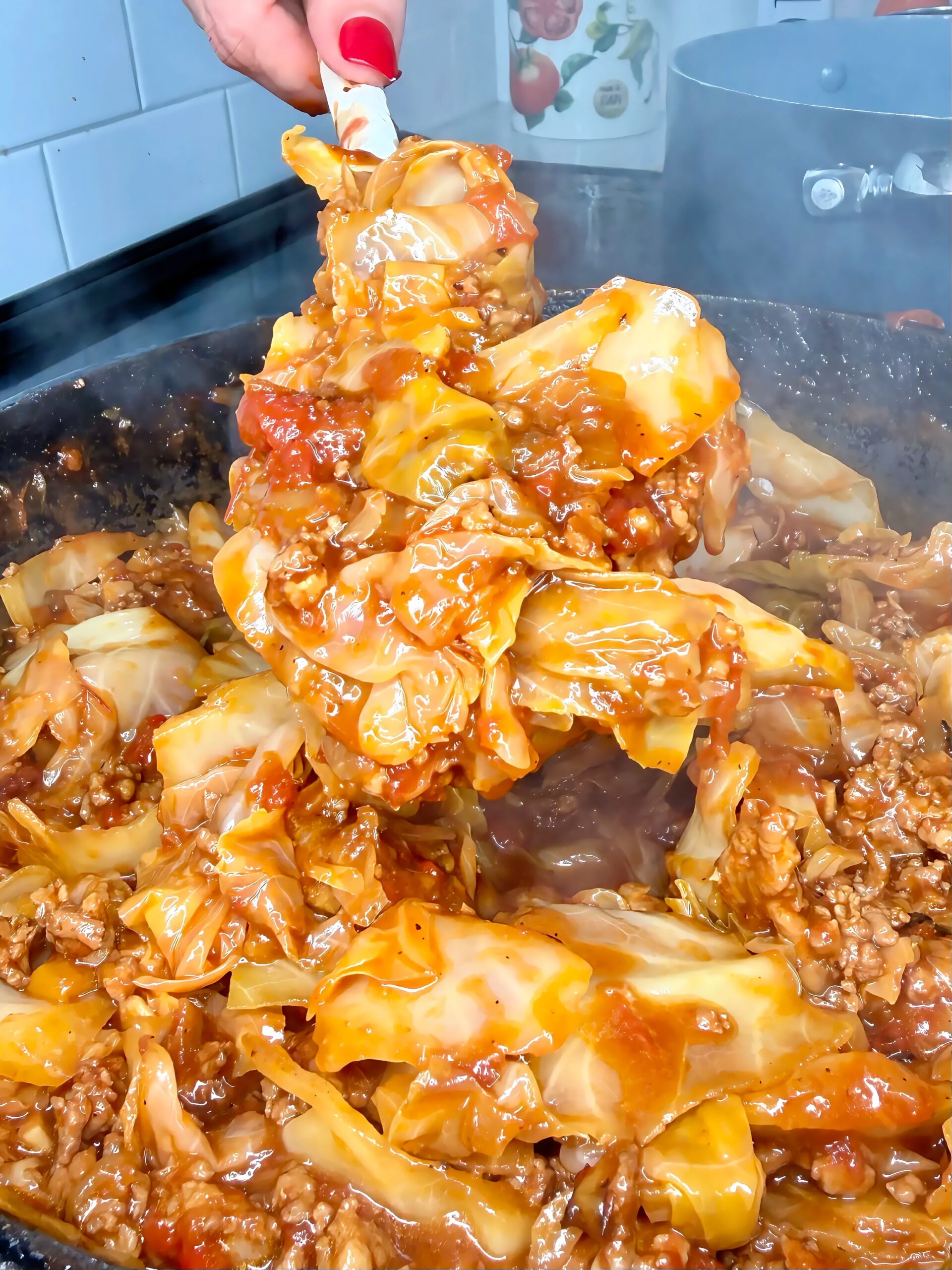
- Add the cabbage to the skillet. It will look like a ridiculous amount at first, but do not worry—it cooks down beautifully.
- Gently press the cabbage into the sauce with your wooden spoon. Continue pressing, stirring, and folding the cabbage into the mixture as it begins to wilt.
Step 7: Simmer the Cabbage
- Bring everything to a steady simmer. You want the liquid gently bubbling, not boiling so hard that it starts jumping out of the skillet and redecorating your stove.
- Cook the cabbage uncovered for about 15 minutes. This allows the liquid to reduce and the flavors to become concentrated.
- Once much of the liquid has cooked down, cover the skillet and continue cooking until the cabbage reaches your preferred tenderness.
- If the cabbage is tender but the skillet still has more liquid than you would like, remove the lid and continue simmering until the sauce reduces to your liking.
- Melissa’s Tip: I like mine saucy enough to spoon over buttery white rice, but not so watery that the rice needs a life jacket. Every stove cooks differently, so use the consistency of the sauce and the tenderness of the cabbage as your guide.
Step 8: Finish the Dish
- Once the cabbage is tender and the sauce has reduced, stir in the reserved chopped bacon, plenty of fresh chopped parsley, and approximately ½ tablespoon of white wine vinegar.
- The vinegar brightens all of those rich, smoky flavors and pulls the entire dish together.
- Give everything one final stir and serve it hot over buttery white rice, or enjoy it straight from the skillet on its own.
Melissa’s Easy Buttery White Rice
- While the cabbage cooks, prepare the rice.
- Melt ½ stick of butter in a saucepan over medium heat.
- Add 2 cups of white rice and stir for several minutes, until the grains are coated in butter and lightly toasted. Season the rice with a pinch of salt.
- Pour in 3½ cups of water and bring it to a boil.
- Cover the saucepan, reduce the heat to low, and allow the rice to gently steam until all of the water has been absorbed and the rice is tender.
- The rice should finish at about the same time as the cabbage, which is what I call a kitchen miracle.